A Cornucopia of Conservation

By Karen Menard
A symbol seen commonly this time of year—the cornucopia depicts an image of prosperity and rich abundance. Consider the “horn of plenty” itself as a fitting representation of the diversity of life that abounds in our own northwestern Ohio backyards and beyond.
Late fall is a great time to visit your Metroparks and observe the bounty of our natural resources—from wildlife to the beauty of their restored habitats. The wetlands of Howard Marsh Metropark, the prairies and savannas of the Oak Openings Region, to Maumee River watershed sites, the successes of conservation work in your Metroparks are evident and often center stage.
Currently, as the seasonal curtain of leaves lifts, a plethora of richness unveils some surprises regarding what has been actually happening “behind the scenes,” in particular places.
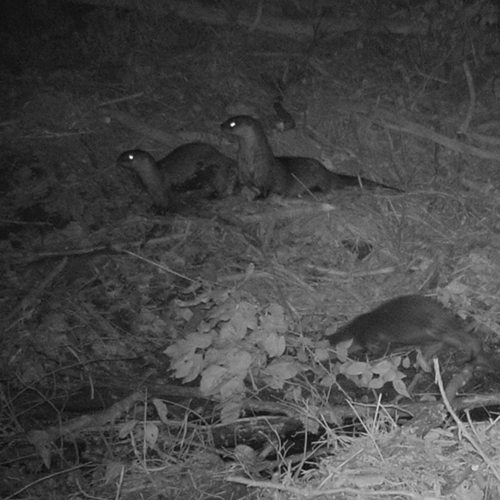
Trail cameras recently revealed photos of beavers, fox, mink, opossum, skunk, coyote, muskrat, songbirds, wood ducks, and interestingly, a group of 3 river otters in parts of the restored expansion area at Secor Metropark! Otters are currently known from Howard Marsh and other locations along the Maumee River, but according to a Division of Wildlife biologist, otters had not yet been documented in the northwest area of Lucas County since statewide reintroduction efforts in the 1990s. Based on the body sizes, it’s likely this group of 3 is a resident mother and two juveniles.
Additionally, flocks of Eastern Bluebirds, wearing the blue sky on their backs, are now easily being seen in Secor Metropark and throughout Oak Openings Preserve Metropark, among other Metropark locations. Their abundance this time of year is attributed to the hard-working efforts of many volunteers and Metroparks staff that support the cavity nesting bird box program. This season, out of the quiet nooks of each bird box, 384 bluebirds successfully fledged and are now a part of these foraging flocks.
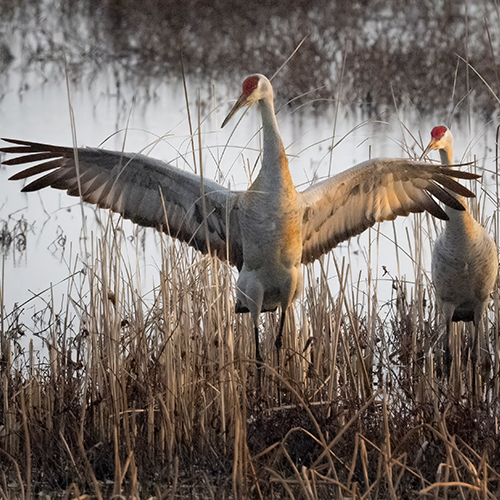
Wood ducks are plentiful and can mostly be viewed at Pearson, Providence, and Howard Marsh. Their success can also be linked to the ongoing nesting box program, extensive invasive species management efforts and annual box maintenance efforts by Metropark staff. Not too far away from the wood ducks were nesting sandhill cranes with young—another amazing win for Howard Marsh.
And below these nesting birds at Howard, swim the fish.
Doing their own “behind the scenes” kind of thing below the surface, the status of our fish populations at this site haven’t been monitored in many years. Though, last August, a group of grass carp researchers from UT’s Lake Erie Center, led by Dr. Christine Mayer, offered their help with a special, electrofishing survey at 6 sites within the marsh.
The process itself is a widely used scientific technique that temporarily stuns fish so that they can be studied more easily. Amazingly, in just a few hours, 215 individuals and the following 18 species of fish were documented (black bullhead, bluegill, brook silverside, channel catfish, common carp, gizzard shad, golden shiner, goldfish, green sunfish, green sunfish x pumpkinseed hybrid, largemouth bass, mosquitofish, orange-spotted sunfish, pumpkinseed, white crappie, white perch, yellow bullhead and yellow perch). This list is considered a good diversity of species, since the flow of water to and from Lake Erie has actually been limited to brief intervals each year.
All in all, the examples listed here are just a few of the many instances of conservation success stories that occur throughout the seasons in the Metroparks. As important natural resource management and restoration work happens year-round, as well as ecological monitoring and surveying, wildlife and their habitats will continue to prosper-- sustaining the cornucopia of biodiversity for future generations.
Photos: Cornucopia (stock photo); 3 River Otters (trail cam); Sandhill Cranes (Art Weber)