Bats on the Move
By Karen Menard
It seems like just until recently you could sit outside in the evening and witness bats flying above. Our northwest Ohio bats pretty much take to the skies as the weather warms in the spring. However, as cooler weather arrives in September, many bats are already on the move, elsewhere.
Fueled through the summer on cold-blooded insects, Ohio bats eat 50-100% of their body weight in bugs each night. Imagine the energy it would take to attempt to continue to reach that goal as the temperatures dip and the insects rapidly disappear. To put it simply, the strategy for their continued success is both hibernation and migration.
Hibernation allows a bat to sustain itself for long intervals without food due to the fact that the animal has the ability to drop its body temperature and slow its heart and breathing rate significantly-- reducing energy costs by almost 98%! The heart rate can actually decrease from 200-300 beats per minute to just a mere 10 beats per minute. Migration offers bats more opportunities for an ideal habitat in regard to temperature, humidity, protection, availability of caves, rock crevices, hollow trees, and even forested sites with ample leaf litter.
Winter habitat preference varies according to how each species is biologically adapted. Some, like the hoary bat, are better equipped for the lower temperatures with a thicker fur coat. Although, these bats will opt to migrate hundreds of miles to the southern United States and seek out hollow tree roosts or rock crevices. Evening bats, as well as the silver-haired, also known as “tree” bats will do the same.
Red bats also sport very thick fur and fur covered ears and are well adapted to handle extreme temperature changes. During the summer, they can sometimes be seen hanging from a tree branch on a hot day with outstretched wings. This behavior helps them cool off. As fall approaches, they follow the other tree bats and fly hundreds of miles south to seek out hollow trees or even the cover of leaf litter in a forest.
Sites like attics or old, protected structures may offer respite to big or little brown bats, locally. However, some will fly to southern Ohio to spend their winters in abandoned mines or caves. The advantage is that, while the outdoor winter temperatures can fall below zero, the temperatures inside of a cave will remain stable, at between 45-50 degrees F. When temperatures do not fluctuate, the environment offers a lower risk of needless energy expenditure during hibernation. Colonial species like the tri-colored, big and little brown, Indiana, and northern long-eared typically prefer to cluster together in a hibernaculum at caves or abandoned mine sites. Knowing the specific biological needs of each species is certainly important for their overall success.
Unfortunately, statewide bat populations have experienced more than a 90 percent decline since 2011, due primarily to white-nose syndrome, pesticide use and forest clearing. Currently, in Ohio there are 4 species listed as state endangered (2 Federally endangered), and 5 listed as species of concern. For these reasons, in the last 15 years bats have been a special focus of conservation efforts in the Metroparks through an annual acoustic monitoring program utilizing volunteers at three parks, maternity roost monitoring in bat condos, and since 2023 the NABat mobile acoustic monitoring program throughout the Oak Openings Region.
In addition to these seasonal monitoring efforts, Wildwood Preserve Metropark was selected as the location for the Ohio Bat Blitz this summer. Presented by the Ohio Bat Working Group, this special weekend gathering hosted over 60 qualified and passionate bat biologists and volunteer educators in addition to approximately 70 community participants. The event takes place at different Ohio sites every two years with the main goals focused on species capture (via mist netting efforts) and identification of rare species, gaining more knowledge about their preferred habitats and also identification of roost trees. Engagement of the community through many different types of education and outreach opportunities was also an important part of the Bat Blitz.
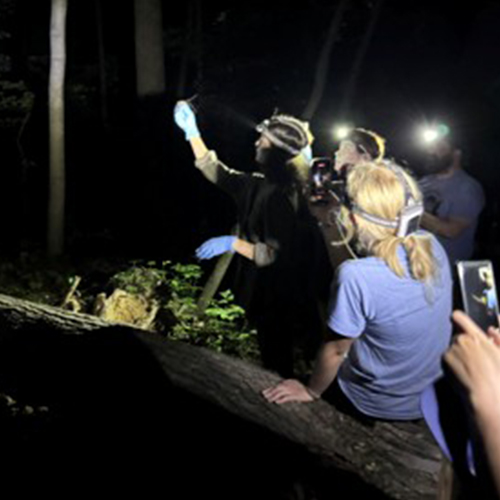
During Toledo’s Blitz weekend in July, 5 mist net stations were set up across the Wildwood Preserve in habitats such as floodplain forest, upland deciduous woodland and prairie. An amazing total of 96 bats were captured across both nights—72 Big Brown, 20 Eastern Red, and 4 Evening bats, which was considered a significant number. It was determined that at least several maternity roost colonies are present at Wildwood, since lactating females and juvenile bats of all three species were captured. The highlight of the event was eventually finding the location of the first ever known Evening bat roost in Ohio! All of this information is an important addition to Ohio’s knowledge base for bat conservation.
Overall, data from this year’s Ohio Bat Blitz was able to reinforce the fact that Wildwood Preserve is indeed a bat oasis in an urban environment. Wildwood’s special natural features like contiguous woodlands within the Ottawa River floodplain and the adjacent oak dominated forest community, as well as the expanse of prairie openings, offer many great opportunities for bat success in the Toledo area. Hollow trees used for roosting, the river corridor, forest canopy and prairie openings loaded with native plants for hunting insects – these are all critical habitat components for the approximately 8 species of bats that return to Wildwood year after year.
Did You Know?
Bats are very beneficial to our environment, as they are able to help control many insect pests saving farmers millions of dollars and decreasing the need for pesticides.
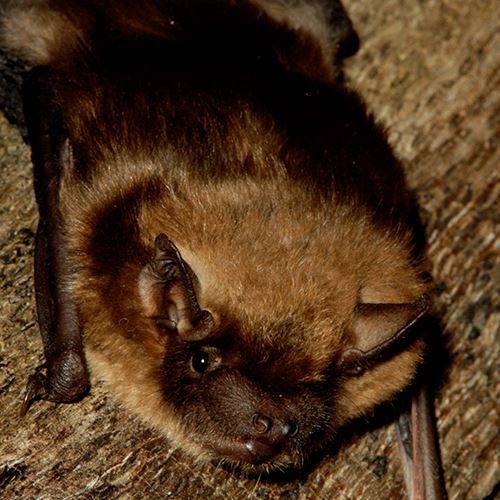
Photos: Researchers at Bat Blitz (By: Jay Wright); Big Brown Bat (Stock Photo)
For more information about bats in Ohio, click here: https://u.osu.edu/obwg/