Birds Band Together
By: Haley Roberts, conservation science intern
A Red-Tailed Hawk sits perched atop a branch high in the canopy of a tree, vigilantly scanning its surroundings for a future meal. The predator, patiently awaiting the right opportunity to ambush prey, suddenly notices a Red-winged Blackbird swooping directly into its line of vision. The blackbird, aware of the hawk’s threatening presence, dives and chitters alarm calls, but the hawk makes no move to attack. Distracted, it looks on as several other birds join the loud chorus. Though the actions of the smaller birds may seem bizarre and risky, it’s actually a relatively common occurrence called “mobbing”.
Mobbing is a group behavior that allows smaller, vulnerable birds the opportunity to reduce or eliminate risk to their lives—or their offspring’s lives—in the presence of a predator. Since these smaller birds are virtually defenseless against a predator like a hawk or an owl on their own, they often rely on mobbing as a group to discourage predators. This typically involves chasing and producing alarm calls that warn other birds in the area of the predator’s presence, but can even involve dive-bombing or pecking at the threat!
But if the small birds are so close to the predator, why doesn’t the predator simply eat them and benefit from the mobbing event? The answer lies in the typical hunting approach of the predator. Birds such as hawks and owls are ambush predators, meaning they rely on stealth and the element of surprise to snatch their meals. When small birds hear the alarm calls and recognize that a predator is in the area, the predator loses its advantage and often won’t spend the energy attempting to catch the birds. Since the smaller birds can outmaneuver the larger predator, the predator will often leave the area to try its luck in a different, unsuspecting location.
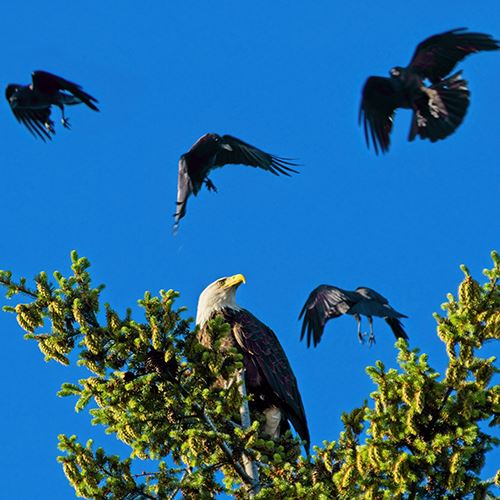
One of the most frequent bird antagonizers is the American Crow. Crows are famous for their intense mobbing events, which are most commonly directed at owls and raccoons. Like many other birds that mob, crows focus on predators that pose the largest threat to them. Though, it is also important to note that large birds who don’t pose a reasonable threat to crows (such as Bald Eagles and Turkey Vultures) can also become victims of mobbing behavior.
Crows are also known to make contact with predators more than other species. Sometimes they can even be seen bumping into predators in addition to pecking and calling. In addition to crows, other species that frequently engage in mobbing behavior include Red-winged Blackbirds, Tufted Titmice, Blue Jays, and Black-capped Chickadees. However, the smaller birds will typically join a mobbing event rather than initiate one to benefit from the safety in numbers.
Bird mobbing is an effective tactic for predator defense that showcases the depth and complexity of bird communities. The alarm calls from mobbing events are even recognized across species, emphasizing the extent and impact of this communication. This behavior acts as an excellent example of how safety in numbers and threat recognition are both a crucial part of survival. The next time you’re outside and hear a cacophony of bird calls, be sure to look up and you might just witness a mobbing event yourself.
Did You Know?
American Crows are also common targets of mobbing due to their tendency to rob other birds’ nests of eggs or young.