Built Bird Tough
By: Karen Menard
Imagine a 200 pound person having to gain and lose 20 pounds of fat in 24 hours. Amazingly enough, wild songbirds, on a smaller scale, can experience similar physical changes each day during these bitterly cold temperatures as they attempt to survive the outdoor extremes. No doubt, their adaptations to these challenges place them in the category of natural marvels, where “toughness” equates to having the ability to successfully overcome cold weather obstacles.
Simply put-- a bird’s answer to winter survival is the result of a math equation. However, having the means to solve it is where the challenge lies.
For a bird, FAT is where it’s at. In their wintry world, fat-rich resources are of utmost importance, being consumed and added, then quickly subtracted metabolically as the weather dictates. This priceless energy qualifies as the most concentrated source and ultimately powers their feathered bodies to where they need to be, whether it’s migration season or enduring the winter elements.
Stored body fat is the primary fuel essential for surviving thirteen, long hours of frigid darkness each night. Depending on how low the temperature drops, a bird may need to consume enough energy equivalent to ten percent of its body weight in fat before nightfall in order to conquer the cold. As birds burn around eighty percent of these fat reserves over the long night, they wake up hungry, much lighter, and in need of a food source to start their icy day---all over again.
As the sun rises, so does their body temperature of 104 degrees which must be maintained throughout the day. Considering their body temperature, keeping warm/conserving heat, and the extra energy needed for foraging, a songbird could potentially burn thousands of calories a day. Their best solution for this cold weather problem is to be able to locate and consume enough fat-rich food to sustain the caloric expenditure both during the daytime AND throughout the night.
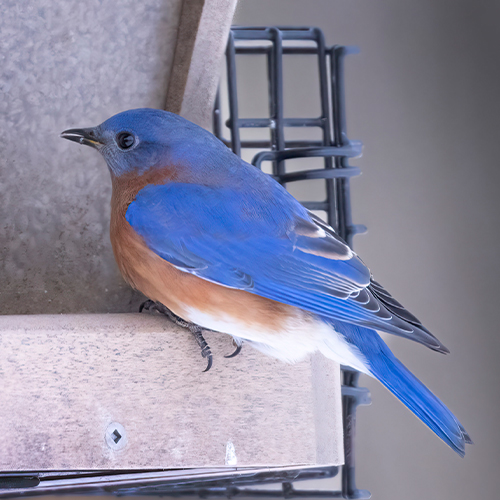
So, how are songbirds, such as eastern bluebirds, adapted to help solve the arctic equation? If the temperatures plummet below zero, these animals that weigh about as much as a pencil, have the ability to combat the frigid conditions through the engagement of a few survival strategies.
The human solution would be to just grab a thick, down-filled coat or blanket. However, the key here is the word, “down,” which refers to the use of actual feathers, as birds use their own, built-in layer of down to essentially serve the same purpose. These light and fluffy feathers are located underneath the topcoat of tougher, outer feathers and are responsible for a birds’ puffy appearance on a cold day. By raising tiny muscles under the skin (similar to goosebumps), birds can utilize these feathers for trapping smaller pockets of air around their body, creating their very own layer of insulation.
We all know that putting on our coats will take care of warming most of our body; but for our legs, feet, face, and hands, we resort to additional, warm attire. How does a bird protect its extremities? Therein lies another part of the winter solution, and it’s amazingly technical compared to us just putting on boots and wool socks.
The legs and feet of a bird are comprised of tendons, scales, and bones—not muscle tissue; which means, these parts of their body can withstand very low temperatures without damage. Technically speaking, they are able to anatomically engage in an efficient vascular process called, “countercurrent heat exchange,” which regulates the temperature of the blood flow back and forth to the feet and legs in order to conserve heat. Resting on one foot, with the other tucked in toward the belly is also another strategy used for warmth; and, additionally, awe-inspiring to watch a bird gracefully balance on a utility wire in the midst of winter. Rivaling some of the best circus acts, the backward head tuck maneuver further retains precious heat commodities and can provide an additional layer of protection for the beak.
As a last resort, on very cold nights, birds will enter a state of metabolic hypothermia which has the ability to lower body temperatures by 10-15 degrees in order to conserve energy. As part of this process, shivering takes place which activates muscles and generates heat; however, it does require a large amount of calories. Not enough caloric fuel to power through the evening, unfortunately, equals trouble. Huddling together in nest boxes or protected thickets will heighten the likelihood for survival under these circumstances as birds are able to capitalize on shared body heat.
The bottom line is that winter survival relies on the ability of a bird to successfully balance the use of its innate survival mechanisms with access to sufficient, yet sustainable resources like protective shelter, consistent, high fat foods/calories, and fresh water.
As extreme winter weather conditions dictate, sometimes birds just need some extra help. In the Metroparks, many birds rely on food sources in the Windows on Wildlife, as well as natural area offerings like poison ivy berries, wild grape, dogwood, and Virginia creeper, insect larvae, and seeds. Oftentimes, flocks of songbirds can be seen along the trails foraging for these items together, maximizing the potential for success in locating feeding hotspots.
This winter, consider helping the birds out in your own backyard by setting up a feeding station. Consistently offering food high in fat like suet cakes, oil sunflower seeds and hulled sunflower “chips” are very good options for all types of birds. Just about any bird species will eat the chips, which are packed with needed calories. Winter birdwatching can quickly become an addicting pastime that many of us have come to really enjoy, as the cold temperatures often bring in many types of species to feeding stations.
Author’s Note:
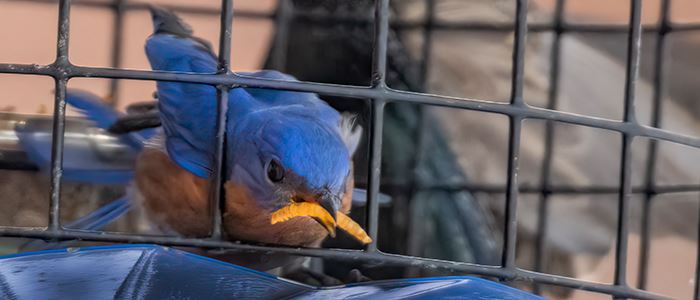
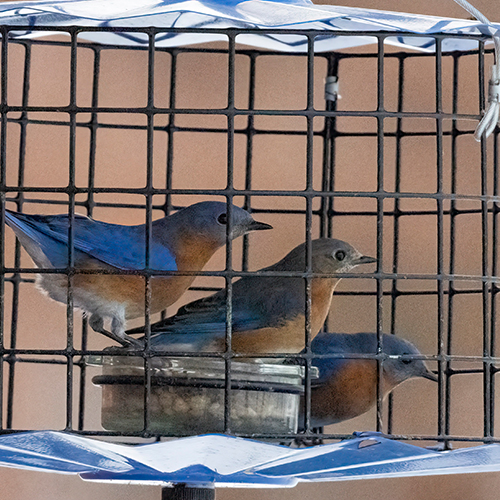
This article was inspired by a flock of six eastern bluebirds that chose to remain at our Metropark office feeding station this winter. Typically, this species eventually migrates south before the extreme winter temperatures set in, but this group stayed into the new year, yet quickly encountered subzero conditions and found themselves facing the wrath of a snowstorm.
It is known that bluebirds have a very high metabolism with a fat load of only about five percent of their body weight. Sometimes it becomes a struggle for them to survive the harsh conditions if ample food is not available. Therefore, much effort was put into keeping our special flock fed by offering large amounts of dried mealworms, suet “berries,” and hulled sunflower chips. Most days, I witnessed this flock gulping all of these items ravenously and frequently throughout the day. My only hope was that they had a protected place to shelter for the evening, had eaten enough fat calories to get them through the cold night, and that I would see them again.
As they greeted me each day, sitting one-legged, puffed up along the utility line, I marveled at the fact that I, having the best winter gear and heated car seats, could barely even deal with the wind chills and snow. So, the nagging question became---How could a one-ounce bird survive these temperatures?
And, indeed, the bluebirds all made it through, still sporting the beautiful blue sky upon their backs—a testament that nature is truly amazing.
Did you know?
Through the Metroparks cavity nesting bird program last season, 340 eastern bluebirds hatched and fledged from the nest boxes at different park locations.
Photos taken at feeding station by Art Weber