Make Way for the River Livers
By Karen Menard
They lurk in the aqueous depths, and their underwater realm as they experience it, is filled with muffled sounds of fast-paced life. Incessant moans of boat motors, booms of fireworks, crashing waves, the loud, vibratory hums of 50,000 ton cargo ships slowly passing overhead, are all happening in a world above. Mussels, also known as freshwater bivalves, are long-lived and slow moving. Throughout their lifetimes, they quietly exist in a small area and are hard at work supporting the health of our local, aquatic ecosystems.
Often overlooked, these docile animals sit silently, tucked into rocky substrates lining the Maumee and spend their days laboriously filtering out chemicals, algae, bacteria, and sediment, improving water quality—analogous to how a human liver functions in the removal of toxins. Considered bioindicators, vulnerable to pollution and overall habitat destruction, mussels are one of the most at-risk groups of animals in North America today.
Some of them no longer thrive in the microhabitats of the waters they once called home. In fact, 11 species in Ohio are currently listed as extinct, 10 are considered extirpated. In addition, out of the 80 or so species statewide, 24 are now endangered, 4 threatened, and 11 are listed as species of concern.
The story of their lifetime of often fifty years or more in that very spot is written on their shells. Similar to how a tree’s annual growth rings reveal special patterns associated with temperature stress, diseases, weather conditions, light, nutrient and water availability, the variations of the ridges and lines on a mussel shell are also reflections of the conditions of their environment. Biologists can determine a mussel’s age by counting the individual ridges, which then can be analyzed to determine overall stream health over time.
Mussel diversity does occur, intermittently, at various sites throughout the Maumee River watershed, depending on water depth and flow, sediment composition and depth, streambed stability, vegetative habitat, silt/pollutant content and host fish. Species like the “Mapleleaf,” “Threeridge,” “Giant Floater,” “White Heelsplitter” “Liliput” and the “Pink Heelsplitter,” all actually reside in the vicinity of the Riverwalk area of the Maumee!... And, that’s great news.
Photos, below: Threeridge and mapleleaf mussels
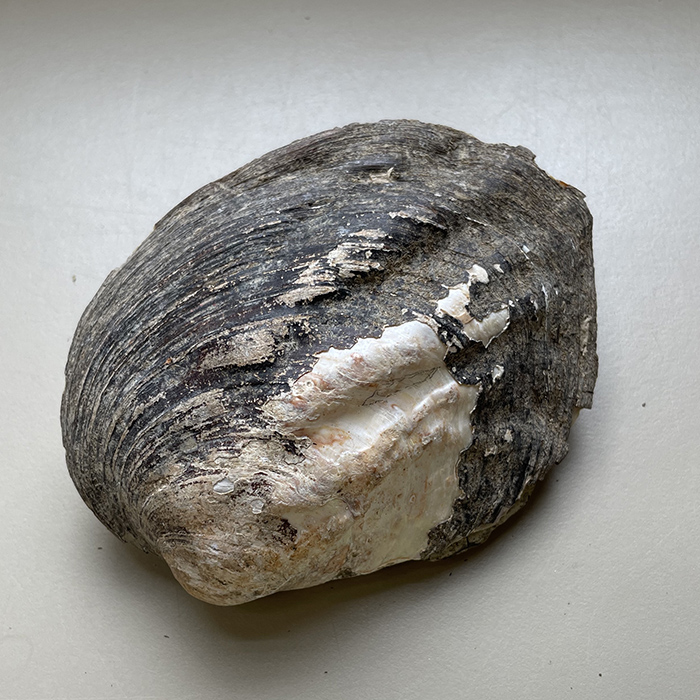
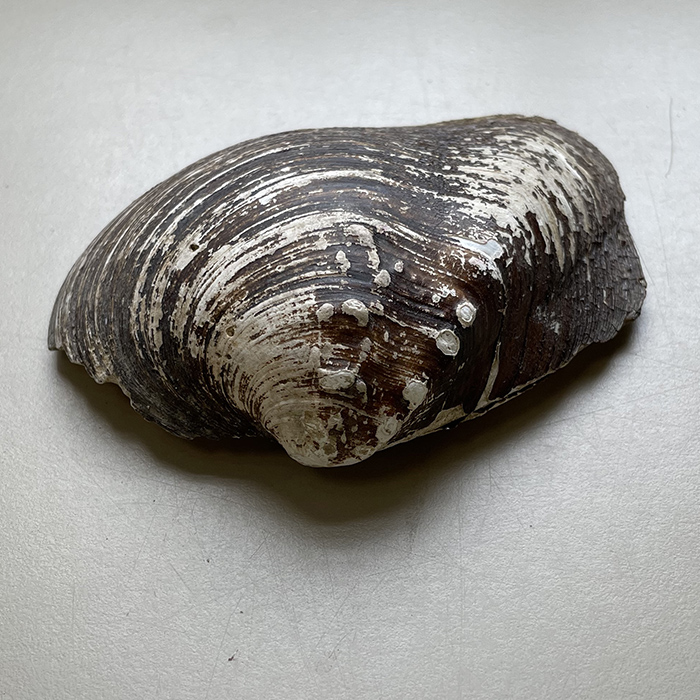
These downtown river inhabitants not only remain there, currently, because they find that the river site meets their needs, but also because their specific host fish also can be found swimming nearby, as well. What’s the fish connection?
Fish are important transporters of mussel larvae (glochidia) and act as specific hosts. For a mussel to successfully reproduce, their host fish must also be present. Microscopic glochidia must be able to latch onto the gills of the fish and embed themselves into the tissue (doing no harm to the fish), where they will remain filtering nutrients for a few weeks as they transform into juvenile mussels.
Interestingly, the Threeridge, which is more of a generalist, can utilize several hosts such as Bass, Catfish, Sunfish and Perch; the White Heelsplitter--Crappie and Carp; Pink Heelsplitter and Fragile Papershell—Sheepshead; and Mapleleaf—Channel Catfish. There have been approximately 11 species of mussels found in the downtown Toledo stretch of the Maumee, also coupled with much fish diversity to support their continued breeding success.
The Mighty Maumee is a great resource for not only us, but wildlife as well. As an important river ecosystem and migratory bird corridor, it is not only home to mussels and fish, but many species of plants, reptiles, amphibians, macroinvertebrates, mammals, crayfish, and breeding birds.
How can you assist in helping conserve the health of the Maumee?
- Participate in river clean-ups
- Recycle and keep trash in cans
- Keep grass clippings, chemicals, pool water and other debris out of storm sewers
- Plant a tree
Did you Know?
Some mussel species have what are called “mantle lures.” These appendages are meant to resemble wiggling prey to attract hungry fish. Once a fish falls for this trick, the mussel immediately releases her glochidia onto the fish. See the video below.