Ten-eyed, Slithery Worm Eaters
By: Karen Menard
As strange as the title description sounds, there does exist such an animal phenomenon AND it can be found in the Metroparks, believe it or not.
Living in a dank, shadowy world filled with darkness and mud, five sets of eyes provide an easier means for detecting prey—especially earthworms.
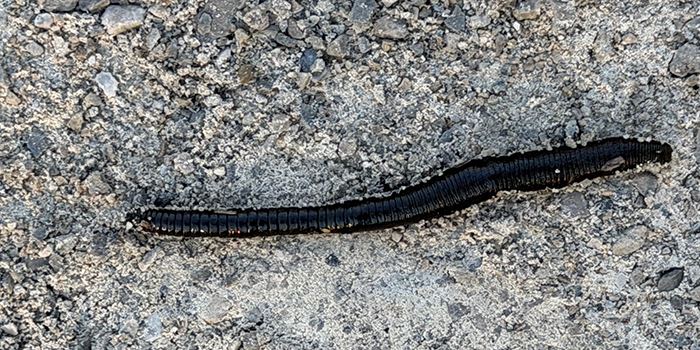
Some may call them the earthworm’s grisly cousin—the freshwater leech (Haemopis sp.), large, fellow annelids equipped with a mouth capable of swallowing prey whole.
The leeches in the Haemopis genus are actually considered “macrophagus” predators, meaning that they do not latch onto their prey. Having very few, blunt teeth, their mouths almost resemble the look of a vacuum as they consume their unlucky victims.
Finding one of these creatures is an uncommon occurrence, as they mostly spend their lives in and around vernal pools or wetlands; however, wormy meal cravings sometimes draw them onto land or nearby trails. Posing no threat to humans, they seek out mainly larvae, worms, small amphibians and snails using special chemoreceptors located on their upper lip.
The term, “leech,” often conjures an image of a bloodsucking organism (aka sanguivore), and these smaller species also do exist locally in ponds, lakes, rivers and ditches. Depending on the type, however, they prefer to dine on a variety of life forms--from fish to aquatic mammals to tiny crustaceans. Surprisingly, bloodsucking leeches can be quite numerous at some vernal pool sites, yet serve as critical components of the aquatic food chain. These organisms provide food to numerous, other species living in the same environment.
All in all, leech species present in a wetland can really be a good thing. They are vital to maintaining balance within their habitat through their roles as predators AND energy-rich prey for numerous other species. Additionally, their ability to “slither” their segmented bodies along the bottom portion of the leafy, muddy wetland pool stirs up the substrate and results in better oxygen circulation and nutrient release.
Photo by Karen Menard: Leech along trail at Fallen Timbers Battlefield ( Haemopis sp.)