The Importance of Pollen
By Claire Elsie, Metroparks Conservation Science Intern
When most people think of pollen, they imagine a warm spring day with yellow dust coating their cars, a golden dusted bumblebee, or even a sneeze. Pollen is easy to overlook, or blame for seasonal allergies, but these tiny grains are much more complex than they might seem. They are silently at work shaping the landscape around us.
So, what exactly is pollen? Pollen is the male reproductive material of seed-producing plants. It consists of microscopic grains containing the genetic material needed to fertilize another plant of the same species to produce seeds. In flowering plants, pollen is produced by the anthers, the pollen-bearing structures at the tips of the stamen. Once mature, pollen is released from these structures with the mission of finding another flower of the same species. Unlike animals, plants can’t move to find a mate, so they rely on pollen to make the journey.
Although pollen grains are microscopic, they are remarkably tough. Each pollen grain is wrapped in an incredibly strong biological polymer called sporopollenin. This protective outer shell helps the pollen to survive sunlight, drying winds, rain, and other environmental challenges on their journey. Some pollen grains only drift a few feet before reaching their destination; however, others may travel miles, making their resilient outer coating vital for their survival.
Plants have evolved two primary ways to move pollen from one plant to another. The first is by wind. Wind pollination occurs when plants like oaks and grasses release large amounts of lightweight pollen into the air, relying on the wind to carry it to another plant. Because wind pollinated plants release so much pollen into the air, usually millions of individual grains, they are often the cause of the spring and summer allergies many people experience.
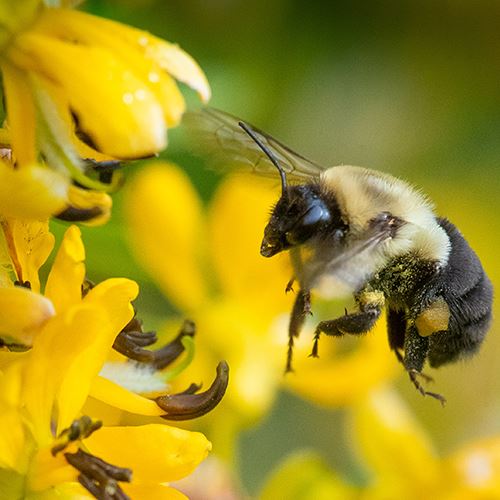
The second method of movement is by wildlife. Many of our favorite wildflowers depend on animals instead. Bees, butterflies, wasps, moths, and more transport pollen while visiting flowers for nectar or pollen to eat. The pollen produced by these flowers is often sticky, allowing it to cling to the body of a pollinator. As pollinators move from bloom to bloom, they help exchange pollen and genetic material between plants.
For many plants, successful reproduction depends on pollen reaching a different individual of the same species rather than fertilizing the same flower. This process, known as cross-pollination, creates new combinations of genes from different plants. Greater genetic diversity in plant populations helps plants better resist diseases and insect pests, better adapt to changing weather, and overall, produce healthier generations. Over time, the exchange of genes makes ecosystems more resilient.
The journey of a single pollen grain may seem insignificant, but it is the foundation of healthy ecosystems and the incredible diversity of plants that surround us.
Did you know?
Not all pollen is created equal. Individual pollen grains from different plants can have completely different shapes and sizes, distinct enough to tell the plant the pollen originates from shape and size alone!
Palynology is the study of microscopic pollen grains. Ancient pollen, found buried in soil, can be analyzed to investigate climate shifts and human history. Its tough, outer coating easily resists decay over time.