Toadally Tiny
By Haley Roberts, Conservation Science Intern
Every summer, thousands of toadlets emerge from backyard ponds, vernal pools, and floodplains. They venture away from these bodies of water they originally called home, walking and hopping to higher ground where they will begin their new stage of life.
The story of these little amphibians began in the spring, when a female toad laid her eggs in the shallow edges of a wetland. Many others followed suit, their clutches forming long ribbons made of thousands of eggs. Soon, the eggs begin to hatch, and the tadpoles spend the next 40-60 days in the same body of water, feeding on suspended plant matter and microorganisms. They will remain close together and swim in a school, hiding in vegetation to avoid predation.
Over the span of 50 days, the tadpoles will change dramatically through a process called metamorphosis. The development of the rear legs occurs first, then skin covers the gills and the front legs emerge. Though tadpoles begin to reabsorb their tail while they still remain in water, new toadlets can still be seen with small remnants of their tails even after emergence!
In June, the toadlets are able to emerge from the wetlands and migrate to upland habitats that surround their pond. At the time of emergence, they are often no larger than a dime (or approximately 15 mm). The tiny toadlets are easily distinguished from the larger (75 mm) adult toads for several months. However, the growth rate of toadlets is known to be particularly rapid-- Fowler’s Toads are able to grow at a pace of 0.36 mm a day. The toads will typically reach adult size in one year and full reproductive maturity in one to two years.
While the toadlets are exploring their new terrestrial surroundings, they have to be extra wary of predators. The annual survival rate of toads is incredibly low. One report found the annual survival of post-metamorphic Fowler’s Toads to be as low as 27% and the survival of tadpoles to adulthood to be less than 1% (COSEWIC 2010). Since toads are popular cuisine for predators such as red-shouldered hawks, hog-nosed snakes, and raccoons, it’s important that they have suitable places to hide and rest.
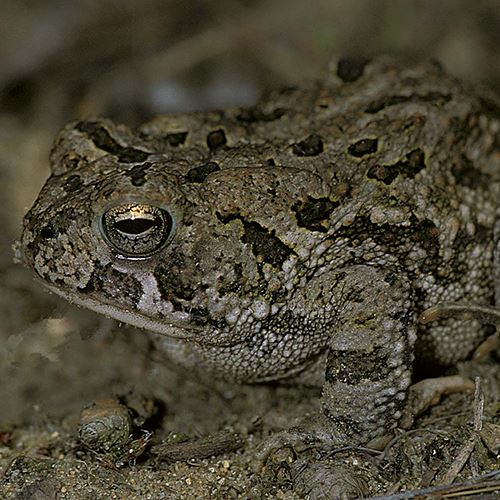
Toads also possess some abilities to help them avoid predation. One of the defense mechanisms they are most known for is the production of a toxin from their parotoid gland. This irritating toxin immediately lets predators know that the toads are not to be messed with and can cause harm to some predators if ingested. Additionally, toads have exceptional camouflage and will remain still if they sense a threat is nearby in order to avoid detection.
Camouflage also helps toads as predators themselves, as they are beneficial in keeping populations of insects in check. Large quantities of garden pests such as slugs, crickets, beetles and other species are often consumed on a daily basis.
To support these amphibians locally, consider increasing the amount of natural shelter in your yard. Objects like logs, rocks, and dead leaves can provide great refuge from predators and extreme temperatures. If you would like to spot toadlets in action, keep an eye on the ground during overcast, humid, or rainy days.
Did you know?
Northwest Ohio is home to two species of toads—the American Toad and the less common, Fowler’s Toad. You can tell them apart by the warts on their back (Fowler’s Toads have more than two warts per spot while American Toads only have one to two) or by their distinct calls.
References
COSEWIC. 2010. COSEWIC assessment and status report on the Fowler’s Toad Anaxyrus fowleriin Canada. Committee on the Status of Endangered Wildlife in Canada. Ottawa. vii + 58 pp.