Weaving a Tangle of Webs
By Karen Menard
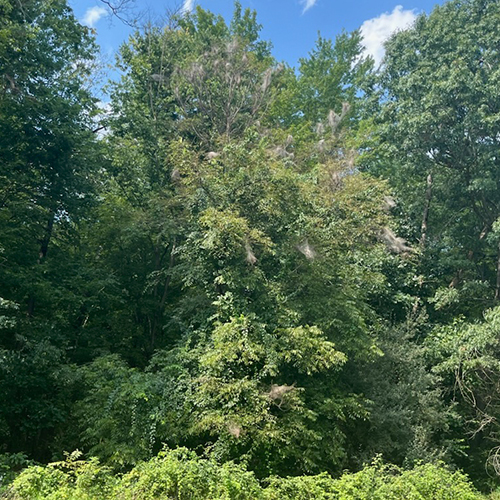
If you have been to Oak Openings Preserve recently, you may have noticed conglomerations of webbing wrapped around portions of tree branches.
Behind these tangled, unsculpted masses of silk lurk the insects behind the webbed blobs.
Fall webworms are the culprits--not tent caterpillars. These species are typically found later in the summer and aren’t too picky when it comes to which trees they prefer. They can be found in many different tree and shrub species, but tend to favor black walnuts, hickories, elms and fruit trees.
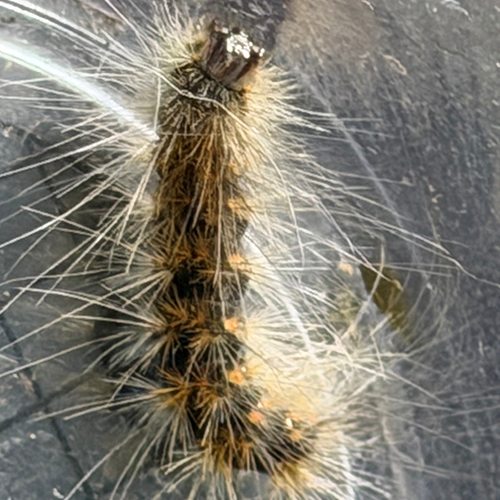
The species found here in northwest Ohio are called Hyphantria cunea and are considered native; however, there are two “biotypes” or forms, of this species—one being the red- headed form and the other, the black-headed form, which is most common. Currently, however, the red-headed form was recently spotted in the Oak Openings. They tend to build larger congregations of communal nests on one tree and can defoliate faster.
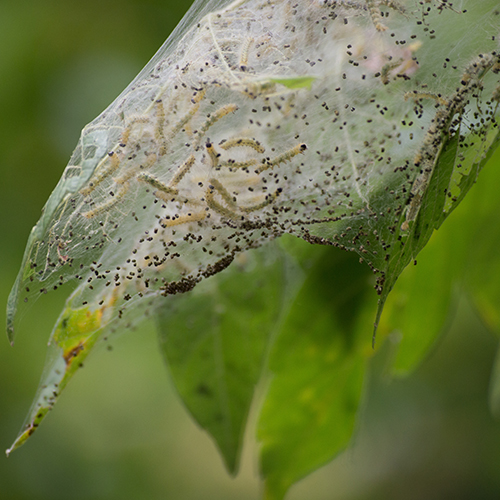
If you look closely at the webbing, you will see the tree’s leaves wrapped around many furry caterpillars or “webworms” who are at work devouring the leaves inside. As they grow in size, their silken nest expands or stretches to encompass more leaves, providing more fuel for the worms. Healthy, established trees can recover since much of the damage is happening late in the season; however, young or stressed trees may be more at risk in these situations where many egg masses exist.
When the insects have completed their lifecycle as a caterpillar (during the fall), they will fall to the ground or remain under bark, pupating through the winter months. During the spring, they will emerge as a pretty white moth and start next season’s process all over again.
Did you know?
Webworms are a good food source for beneficial insects, parasitoid wasps, birds and other wildlife.
For more information, click the link here: https://bygl.osu.edu/node/1848
Photos: Red-headed webworm caterpillar: Karen Menard; Webworm nest: Stock photo; Webworm tree: Haley Roberts